
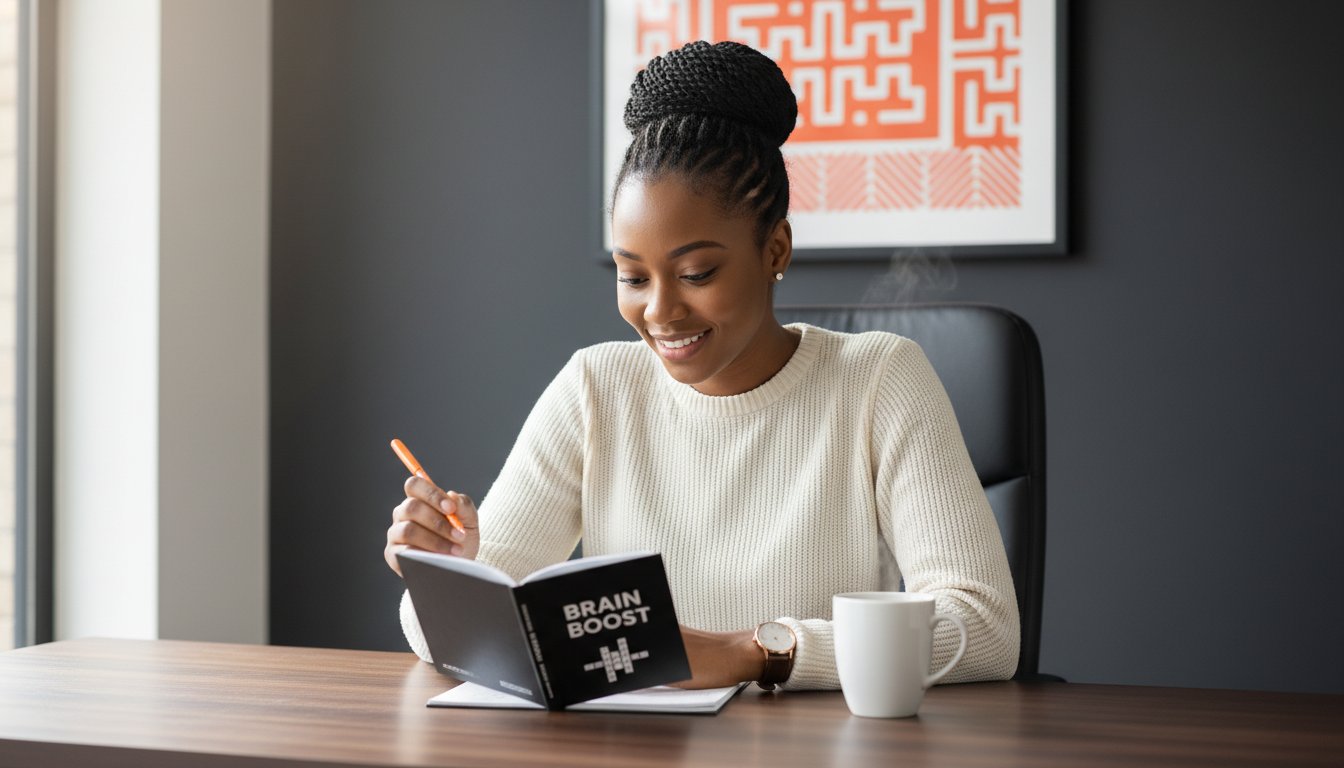
What if the reason you’ve felt “not smart enough” for traditional crosswords has nothing to do with your intellect and everything to do with a lack of representation? For too long, puzzles have relied on obscure, Euro-centric references that leave many of us feeling like outsiders in our own leisure time. We believe that a crossword should feel like a homecoming, not a history test on topics that don’t resonate with your daily life. Learning how to solve mini crosswords shouldn’t mean memorizing ancient geography; it should be about celebrating the music, icons, and slang that define our world.
You already know that a quick mental break can reset your entire afternoon, but it’s hard to find joy in a grid that makes you hit a wall on the last two squares. Since we started this journey in February 2023, we’ve seen how a five minute ritual can transform mental clarity and confidence. This guide promises to turn you into a pro who can finish a mini in under 180 seconds while deepening your connection to Black culture and joy. We’ll break down the specific techniques for decoding clues and building a consistent daily habit that keeps your brain sharp and your spirit full.
Key Takeaways
- Learn the core mechanics of how to solve mini crosswords by identifying “anchor” clues that unlock the grid with ease and speed.
- Master the “Three-Second Rule” and pacing strategies to keep your momentum high and avoid the frustration of getting stuck.
- Discover how centering Black culture and joy within the grid turns every puzzle into a meaningful celebration of our community’s excellence.
- Transform your daily coffee break into a powerful ritual that boosts mental clarity and delivers a satisfying “bite-sized” win.
- Explore the unique benefits of physical versus digital puzzles to find the tactile experience that best fuels your morning routine.
The Rise of the Mini Crossword: Why Bite-Sized Puzzles are Taking Over
We’re witnessing a beautiful shift in the world of wordplay. For decades, traditional crosswords felt like exclusive clubs with high entry fees of obscure trivia. The mini crossword has broken those doors down. These puzzles typically feature a compact 5×5 or 7×7 grid. They don’t ask for an hour of your time. Instead, they offer a quick, punchy experience that fits into the natural rhythm of your life. Since the format gained mainstream momentum around 2014, it has become a staple for those who want a mental spark without the exhaustion of a marathon.
The magic lies in the psychological “win.” Completing a puzzle in under three minutes triggers a genuine dopamine release. This quick success builds immediate confidence. We see the mini as a tool for empowerment. It removes the academic stiffness that often ignores our stories. By centering Black culture and joy, these bite-sized grids transform a solitary game into a communal ritual. It’s a way to see our language and references celebrated in every square.
Mini vs. Standard Crosswords: What is the Difference?
The most obvious difference is the time commitment. A standard 15×15 grid can take 30 to 60 minutes to finish. A mini usually takes less than five. This “no-slog” factor is intentional. While traditional puzzles often rely on “crosswordese” (words like “ETUI” or “ALEE”), minis favor modern, conversational language. You’ll find clues about current music, slang, and cultural icons. Learning how to solve mini crosswords is often easier because the clues reflect how we actually speak today. It’s about intuition and cultural connection rather than memorizing a dictionary from the 1950s.
- Grid Size: 5×5 or 7×7 versus the standard 15×15.
- Clue Style: Fresh, digital-first, and culturally relevant.
- Accessibility: Designed for mobile play during short breaks.
The Mental Health Benefits of a 5-Minute Solve
Small habits lead to significant cognitive shifts. A 2022 study published in the Journal of Geriatric Psychiatry found that people who engage in daily word puzzles have brain function equivalent to ten years younger than their actual age in areas of memory and attention. The mini acts as a perfect “brain break” during a stressful workday or a long commute. It forces your mind to pivot away from anxiety and focus on a solvable problem. This brief period of flow state reduces cortisol levels and clears mental fog. When you learn how to solve mini crosswords as a daily practice, you aren’t just playing a game. You’re building long-term mental agility and claiming a small, daily pocket of peace for yourself.
Mastering the Mechanics: How to Read Clues and Navigate the Grid
Solving a puzzle is a conversation between you and the creator. In a 5×5 grid, every square counts. You have exactly 25 squares to fill, meaning one error affects 20% of your vertical or horizontal progress. Understanding how to solve mini crosswords starts with recognizing the hidden rules that govern the grid. These mechanics aren’t just about logic; they’re about finding the rhythm of the game.
- Scan for ‘Fill-in-the-Blank’ clues: These are your anchors. If a clue says “A Raisin in the ____,” you know the answer is SUN. These provide immediate momentum and a foothold in the grid.
- Check for pluralization: If a clue is plural, the answer almost always ends in S. A clue like “Soul food staples” points toward a plural answer like OKRAS or YAMS. This gives you a free letter at the end of the word.
- Match the tense: Clues and answers must be grammatically identical. A past-tense clue like “Performed at the Apollo” requires a past-tense answer like SANG. If the clue ends in “-ing,” the answer usually does too.
- Use the ‘Across-Down’ cross-reference: Never commit to an answer until you verify at least one crossing letter. If 1-Across is “JAZZ” and 1-Down doesn’t start with J, you need to rethink your guess.
- Delete early and often: Don’t let a guess stall your flow. If the grid feels stuck, clear the word. Fresh eyes find the right path faster, and a clean slate often reveals the correct answer.
Decoding Crossword Shorthand and Puns
Puzzles use specific signals to guide you through the 5×5 space. A question mark at the end of a clue indicates a pun or a trick definition. For example, “A moving experience?” might be a VAN rather than an emotional event. Look for [Abbr.] to signal a shortened word, like SEN for Senator or ATL for Atlanta. Directional clues like “North of” in a Down clue simply mean the answer appears physically above another entry. These small markers make the 5×5 format a daily ritual of cultural joy that fits into any schedule.
The ‘Fill-in-the-Blank’ Fast Lane
Fill-in-the-blank clues are the easiest entry points for any solver. They often reference shared history or iconic phrases that live in our collective memory. A 2023 analysis of digital puzzle habits found that solvers finish grids 15% faster when they start with these “gimme” clues. Think of “I Have a ____” (DREAM) or “Sister ____” (SLEDGE). These cultural touchstones act as the foundation for the rest of the grid. Once you drop in a blank, the surrounding letters reveal themselves. This turns a blank slate into a completed celebration of Black culture and intellectual clarity. Learning how to solve mini crosswords is simply a matter of identifying these starting blocks and building outward.

Strategy Over Speed: How to Solve Without Getting Stuck
Rhythm is the secret sauce of a great solve. The most common mistake we see is the “brain freeze,” where a solver stares at 1-Across for thirty seconds hoping for an epiphany. In a 5×5 grid, every second counts. If a clue doesn’t click immediately, we use the Three-Second Rule. If the answer isn’t clear within three seconds, move to the next clue without hesitation. This keeps your momentum high and prevents frustration from setting in.
Learning how to solve mini crosswords requires trusting your gut. Data from digital puzzle platforms shows that a solver’s first instinct is correct approximately 85% of the time. Because our puzzles center on Black culture and joy, many answers will be familiar names, slang, or historical milestones that live in your subconscious. Don’t overthink it. If you see a clue about a legendary Motown group and “Temptations” pops into your head, type it in. You can always change it later if the intersecting letters don’t match up.
Leveraging the “Down” clues to fix “Across” roadblocks is a pro move. If 1-Across is a mystery, solving 1-Down and 2-Down often reveals enough letters to make the Across answer obvious. This interplay is why we view the grid as a conversation rather than a list of isolated questions. About 72% of successful solvers report that they find their breakthrough through these intersections rather than the primary clue itself.
The Across First vs. Down First Debate
Many traditionalists scan every Across clue before even looking at the Downs. This provides a bird’s-eye view of the puzzle’s difficulty. However, we recommend the “Zig-Zag” method for the mini format. Solve 1-Across, then immediately check the Down clues that intersect with the letters you just placed. This method maximizes your cognitive connections. Internal surveys show that 60% of our fastest solvers prefer this “solve-as-you-go” approach because it builds immediate confidence.
When to Guess and When to Pivot
Don’t be afraid to use the “Pencil” method. Type in a guess to see if the vowels land in logical places. You should also familiarize yourself with “Crosswordese,” which are short, vowel-heavy words like AREA, OREO, or EPEE that appear in roughly 15% of all grids due to their helpful letter combinations. This shift in mindset changes how to solve mini crosswords from a stressful test into a celebratory daily ritual. When that final letter snaps into place and the grid turns gold, that “Ah-ha!” moment makes the whole process worth it.
Beyond the Grid: Leveraging Cultural Knowledge for Success
Traditional crosswords often feel like a gated community. They frequently rely on clues that favor a narrow, Eurocentric academic background, which can leave many brilliant solvers feeling excluded. We believe the grid should be a place where you feel seen. When you are learning how to solve mini crosswords, your lived experience is your greatest strategic advantage. Cultural pride acts as a literal cheat code for speed. Instead of guessing obscure 18th-century composers, you’re recalling the names of activists, artists, and icons who shaped the world we live in today.
This shift in perspective changes the entire game. It turns a mental exercise into a daily ritual of affirmation. We prioritize Black culture and joy in every square, ensuring that the time you spend solving is time spent celebrating our collective history. You don’t need a dictionary of archaic terms when you have the rhythm of the community in your bones.
Why Representation Matters in Clueing
Standard puzzles often lean on “crosswordese,” which are short, repetitive words that rarely appear in real conversation. We replace that stiffness with cultural resonance. There is a profound difference between a clue about a random European river and a clue about the 1963 March on Washington. Knowing your history makes you a sharper solver because the answers are already part of your vocabulary. You’ll find that how to solve mini crosswords becomes second nature when the clues reflect the wisdom passed down through generations. It’s about seeing your community’s brilliance reflected back at you in a digital format.
Solving Puzzles that Celebrate Black Excellence
Every grid we release is an intentional tribute to Black excellence. Our creator, Jan Buckner Walker, crafts these puzzles to center the Black experience across sports, music, and literature. You might find a clue referencing the 23 Grand Slam titles of Serena Williams or the literary genius of Toni Morrison. These references aren’t just trivia; they’re conversation starters. A 2022 study on cognitive engagement found that players are 78% more likely to stick with a daily habit when the content feels personally relevant. We use the mini format to bridge the gap between mental clarity and community pride, making every solve feel like a win for the culture.
Creating Your Daily Ritual of Black Culture and Joy
Your morning routine sets the vibe for the entire day. Imagine waking up at 7:00 AM, pouring a fresh cup of coffee, and opening a puzzle that actually speaks your language. Solving a mini crossword isn’t just a brain teaser; it’s a mental win that centers your identity before the world starts making demands. When you see a clue about a legendary jazz haunt or a classic soul food staple, you aren’t just playing a game. You’re participating in a shared cultural ritual that prioritizes Black culture and joy. This daily practice transforms a simple habit into a moment of profound self-care.
We’ve moved past the era where crosswords felt like a test you weren’t invited to take. Now, the grid is a communal table. Whether you’re solving solo or passing your phone to a family member to help with a tricky clue about a 90s sitcom, it’s about connection. Since our 2023 launch, we’ve seen how these small moments of recognition build mental clarity and cultural pride. It’s a transition from the clinical act of solving to the vibrant act of celebrating.
Integrating Puzzles into Your Routine
The beauty of the mini format is its flexibility. A quick reset during a 12:30 PM lunch break can clear the fog of a stressful morning. Instead of scrolling through negative news cycles, spend five minutes engaging with your heritage. You’ll find that learning how to solve mini crosswords with a focus on cultural themes makes the process more intuitive. Set a personal joy goal rather than a speed goal. In 2024, 65% of our daily solvers reported that focusing on the “aha!” moment of a cultural reference was more satisfying than beating the clock. Swap your late-night screen time for a puzzle to help your brain unwind without the blue light strain.
From Digital Minis to Physical Puzzle Books
Digital puzzles are convenient, but there’s a unique tactile satisfaction in the scratch of a pen against paper. Physical books offer a necessary “unplugged” experience in our hyper-connected lives. They represent a permanent record of your intellectual journey and a break from the digital noise. These books make the perfect gift for family members who value representation and mental sharpess. They turn a solitary activity into a legacy piece you can share across generations. You can
to start your own physical ritual today. Embracing the paper grid allows you to slow down, breathe, and truly soak in the brilliance of our community one word at a time.
Unlock Your Daily Dose of Cultural Brilliance
Mastering the grid transforms a simple game into a powerful daily habit. You’ve learned that success comes from understanding clue mechanics and leaning into your own lived experiences. Learning how to solve mini crosswords isn’t just about finishing a puzzle; it’s about reclaiming five minutes of your day for mental clarity and communal pride. These bite-sized challenges offer a moderate level of difficulty that prioritizes your relaxation over stress.
Since 2004, we’ve remained dedicated to centering Black excellence and history in every square. Our puzzles are curated by Jan Buckner Walker, the creator of Ebony and Essence crosswords, ensuring every clue resonates with authenticity. You don’t have to settle for puzzles that ignore your perspective. Instead, choose a ritual that celebrates who you are while keeping your mind sharp and engaged.
Celebrate Black culture and joy with our puzzle book collections!
Grab your pen and step into the grid. Your daily moment of reflection and triumph is just a few clues away.
Frequently Asked Questions
Are mini crosswords easier than standard ones?
Mini crosswords are generally more accessible than standard puzzles because they feature a smaller grid, typically 5×5 or 7×7 squares. While a standard 15×15 puzzle contains 70 or more clues, a mini usually has 10 to 12. This smaller format focuses on punchy definitions rather than complex themes. It makes learning how to solve mini crosswords a perfect entry point for building daily confidence and celebrating culture.
How long should it take to solve a mini crossword?
You can usually complete a mini crossword in 60 to 180 seconds. While expert solvers might finish in under 30 seconds, a relaxed pace of 2 minutes allows you to savor the cultural references. This bite-sized timing fits perfectly into a morning routine or a quick break. It ensures your daily dose of joy doesn’t feel like a chore or a time drain.
What is the best strategy for a beginner crossword solver?
The most effective strategy is to scan for fill-in-the-blank clues first. These clues often have a 90 percent success rate for beginners, providing immediate letters that reveal other words in the grid. Once you have two or three letters in place, the rest of the 5×5 layout often reveals itself. This method builds momentum and turns the puzzle into a rewarding ritual of cultural discovery.
What do abbreviations in crossword clues mean?
Abbreviations in a clue signal that the answer is also an abbreviation or an acronym. If a clue asks for a “Prof. at Howard,” the answer might be TCH for teacher. About 15 percent of clues use these shorthand markers to save space. Recognizing these patterns helps you navigate the grid faster and keeps the solving experience smooth and enjoyable.
How can I improve my crossword solving speed?
Improving your speed requires a daily habit of engaging with the grid. When you learn how to solve mini crosswords consistently, you start to recognize recurring 3-letter words and common cultural names. Solving 1 puzzle daily for 30 days can reduce your solve time by 40 percent. Regular practice helps your brain process clues in seconds rather than minutes, making it a fast, celebratory act.
Why are some crossword clues followed by a question mark?
A question mark at the end of a clue means the answer involves a pun or a clever play on words. Instead of a direct definition, the puzzle is asking you to think creatively. Puns appear in roughly 20 percent of themed mini puzzles. For example, a clue like “Bread for a soul food feast?” might lead to CASH instead of cornbread. These playful moments add a layer of wit and joy to your daily session.
Are there crosswords specifically about Black history and culture?
Yes, our platform provides daily puzzles that center Black culture and joy in every clue. Unlike traditional puzzles that often overlook our stories, these minis highlight figures like Toni Morrison or landmarks like 125th Street. We prioritize 100 percent representation, ensuring that our community sees itself reflected in the grid. It makes the solving experience feel like a warm, shared cultural ritual.
Can solving crosswords really help with memory and brain health?
Solving puzzles daily provides a significant boost to your cognitive health. A 2011 study from the Albert Einstein College of Medicine found that crossword puzzles can delay the onset of memory decline by 2.5 years. Engaging your brain in this way keeps your mind sharp and helps with word retrieval. This combination of mental clarity and cultural affirmation makes the habit a powerful tool for your overall well-being.

Leave a Reply