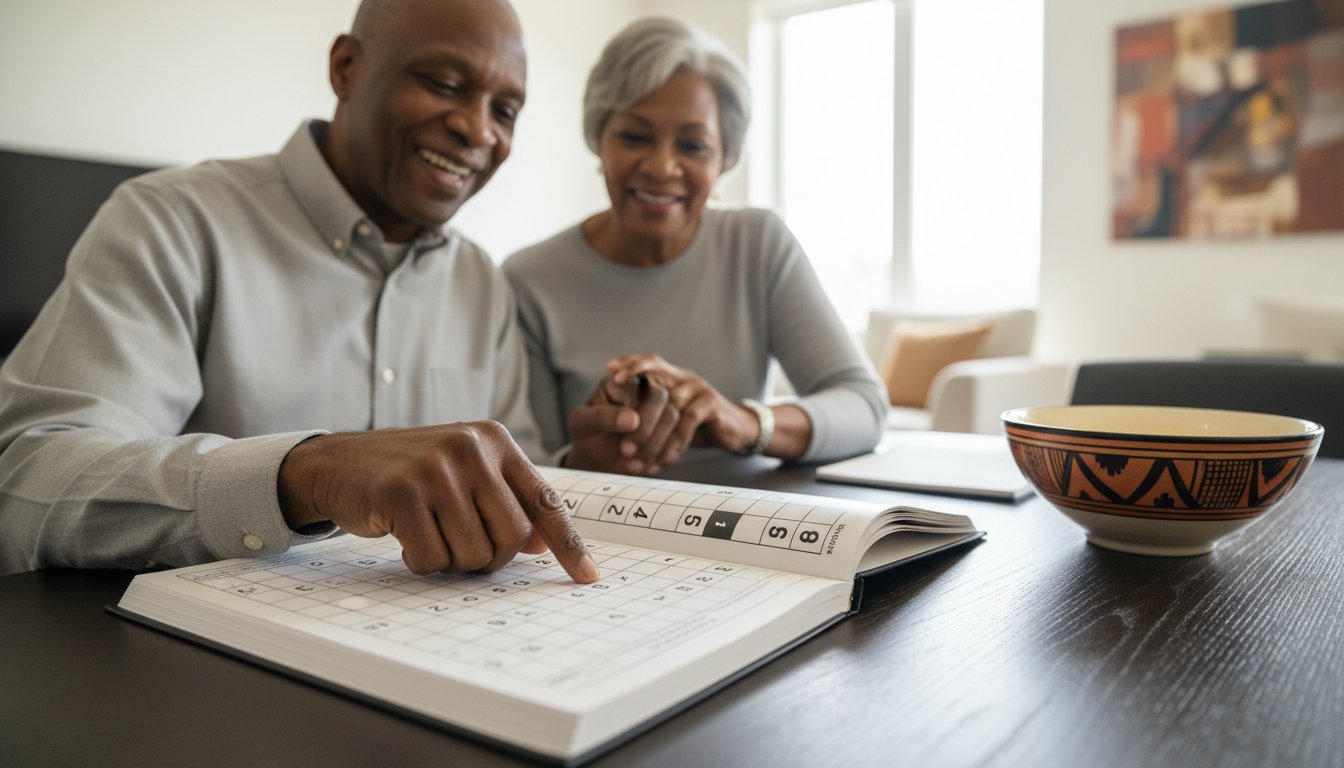
The best puzzles for seniors shouldn’t feel like a chore or a childish distraction. They should feel like a homecoming. You’ve likely encountered those generic, small-print books that don’t reflect your life or the vibrant culture you’ve helped build. It’s frustrating when a hobby meant for relaxation feels patronizing or completely out of touch with your experiences. With the elderly puzzle segment projected to grow at a rate of 8.4% through 2034, it’s clear that our community is looking for more than just a way to pass the time.
We believe your daily routine should be a source of pride and connection. In this guide, you’ll discover how the right mental exercises can sharpen your mind, protect your memory, and celebrate Black culture and joy. We’ll preview the June 9, 2026, release of “BlackCrosswords 2: In Our Own Words” and look at how modern designs are finally prioritizing accessibility and cultural representation. It’s time to find a daily habit that honors your history while keeping your brain at its best.
Key Takeaways
- Learn how puzzles for seniors build neuroplasticity and strengthen your cognitive reserve for long-term mental agility.
- Compare the spatial benefits of jigsaws with the linguistic recall of word puzzles to find your perfect daily match.
- Discover how cultural representation triggers deeper memory recall and turns a simple game into a celebration of heritage.
- Get practical tips for selecting accessible puzzles, prioritizing large print and high-contrast layouts for ease of use.
- See how centering Black culture and joy creates a meaningful ritual that feels like a shared communal experience.
The Cognitive Power of Puzzles for Seniors
Brain health is about more than just remembering where you left your keys. It’s about preserving the vibrant stories, traditions, and connections that define who we are. For many, puzzles for seniors serve as a daily ritual that keeps the mind agile while honoring our personal history. In 2026, we understand that mental exercise isn’t a luxury; it’s a necessity for maintaining a high quality of life as we age. When we engage our minds, we’re not just passing time. We’re investing in our future selves.
To better understand how these activities impact the aging brain, watch this helpful video:
Building Cognitive Reserve and Neuroplasticity
The “use it or lose it” principle is a biological reality for the human brain. When we tackle a challenging crossword or a complex puzzle, we’re doing more than just playing a game. We’re leaning into the brain’s ability to change and reorganize itself. This process allows us to build what scientists call a “cognitive reserve.” Think of this reserve as a mental savings account that helps the brain stay functional even if physical changes occur over time.
The elderly segment of the puzzle market accounted for 13.2% of global revenue in 2025. This growth is projected to continue at a CAGR of 8.4% through 2034. These numbers show that more people are choosing activities that offer a moderate challenge. If a puzzle is too easy, the brain doesn’t have to work. If it’s too hard, it causes frustration. The sweet spot lies in puzzles for seniors that push your boundaries just enough to create new neural pathways without feeling like a chore.
Emotional Well-being and Relaxation
Consistency is the secret ingredient to brain health. We’re more likely to stick with a habit when it brings us genuine happiness. This is where “cultural joy” becomes a powerful motivator. When a crossword clue references a jazz legend you love or a tradition from your childhood, it triggers a deeper level of memory recall and emotional connection. It transforms a cognitive exercise into a celebration of your lived experience and heritage.
Entering a “flow state” while solving a puzzle is a form of active meditation. It helps reduce daily anxiety by focusing the mind on a structured, solvable problem. You get a tangible sense of accomplishment with every solved clue. This daily win boosts your mood and provides a steady sense of purpose. It’s a simple way to find peace in a busy world while keeping your mind sharp for the years ahead.
- Strengthens memory: Regular play helps maintain linguistic and spatial recall.
- Reduces stress: Focuses the mind on a single, rewarding task.
- Builds pride: Culturally relevant clues foster a sense of belonging and community.
Choosing Between Jigsaws and Word Games
Deciding on the right puzzles for seniors often comes down to personal preference and how you want to challenge your mind today. While many people immediately picture cardboard pieces scattered across a dining room table, word games offer a different kind of mental workout. Both styles serve a purpose in a well rounded cognitive routine. Jigsaws focus on spatial reasoning. Crosswords lean into linguistic recall. Choosing between them doesn’t have to be an either-or scenario; it’s about what brings you the most satisfaction in the moment.
Jigsaw Puzzles: Spatial and Visual Engagement
Jigsaw puzzles are a classic for a reason. They require you to visualize how small shapes fit into a larger picture, which keeps your spatial reasoning sharp. Research from the National Institutes of Health highlights the cognitive benefits of jigsaw puzzles, particularly in how they engage multiple cognitive functions simultaneously. In February 2026, Boardwalk Puzzles released a new line of 300-piece sets specifically designed with larger pieces. These are easier to handle for those focusing on fine motor skills and hand eye coordination. They turn a solo task into a communal experience.
However, jigsaws have their limits. They require a dedicated physical space and excellent lighting to avoid eye strain. They’re often a social activity, perfect for a rainy afternoon with family, but they aren’t exactly portable. If you’re looking for something you can do in a waiting room or during a quiet moment on the porch, you might find more success with a book format.
Crosswords and Word Searches: Linguistic Recall
Word puzzles offer a unique “Aha!” moment that’s hard to beat. When you finally crack a clever clue, your brain releases a hit of dopamine that makes the effort worth it. Learning solving crossword puzzles strengthens your vocabulary and long term memory by forcing you to dig for specific facts and cultural references. This type of “clue-based” thinking is vital for keeping the mind sharp and agile.
One of the biggest advantages of word games is their convenience. A crossword book fits in a bag and doesn’t require a card table. For seniors who prefer a “mini” daily habit, a quick puzzle is a low barrier entry point into a brain healthy routine. Whether you’re looking for a relaxing solo activity or a way to stay connected to your heritage, our crossword puzzle books prioritize large print and high contrast layouts. This ensures the focus remains on the joy of the game rather than the struggle to read the page. It’s a simple way to keep the mind engaged while celebrating Black culture and joy.

Why Cultural Representation is the Missing Piece
Mainstream puzzles for seniors often miss the mark. They focus on generic themes like pastoral landscapes or basic trivia that doesn’t speak to our history. We’ve seen books filled with clues about European royalty or obscure 1950s sitcoms that have no connection to our community. This “Representation Gap” makes a relaxing hobby feel like a test of someone else’s culture. For a puzzle to truly engage the mind, it must reflect the solver’s lived experience and heritage.
Engaging with familiar cultural references does more than just provide entertainment. Research from Texas A&M University shows that mentally stimulating activities like games can slow cognitive decline in the elderly. When those games are rooted in our own stories, the cognitive benefits are amplified by emotional resonance. It turns a mental workout into a moment of connection.
Triggering Positive Nostalgia Through Clues
Cultural shorthand is a powerful tool for memory. When a clue asks for the name of a pioneering journalist like Ida B. Wells or a legendary lawman like Bass Reeves, it does more than test your vocabulary. It triggers a deep sense of pride. These aren’t just generic facts. They’re pieces of communal wisdom that we carry with us. This level of specificity is what makes a crossword feel like a conversation with an old friend. It turns a simple grid into a celebration of Black excellence. Every answer found is a reminder of our collective strength and creativity.
Representation as an Act of Joy
We consistently prioritize Black culture and joy as our North Star. This isn’t just about representation for representation’s sake. It’s about wellness. Moving away from clinical, “senior-focused” puzzles toward celebratory ones changes the entire experience. It transforms puzzles for seniors from a medical recommendation into a daily ritual of affirmation. You aren’t just “doing a puzzle”; you’re engaging with your culture.
These puzzles also bridge the gap between generations. Imagine a grandmother and grandson solving a “mini” crossword together. They’re not just filling in squares. They’re sharing stories about music, history, and traditions. This shared cultural ritual fosters a sense of belonging that generic puzzles simply can’t match. It’s about finding yourself in the clues and feeling seen in every solution. When the content resonates, the habit sticks. That consistency is what keeps the mind sharp for years to come.
How to Select the Perfect Puzzle for a Senior Loved One
Selecting puzzles for seniors is an act of love and intentionality. It’s not just about filling a shelf. It’s about finding a tool that sparks conversation and honors the solver’s dignity. Many mainstream options feel patronizing, using graphics or themes that belong in a nursery. You want something that treats the senior in your life like the intellectually engaged adult they are. Whether they’ve been solving for decades or are just starting a new habit, the right choice makes all the difference.
Evaluating Difficulty and Format
The sweet spot for engagement is a moderate challenge. If a puzzle is too simple, it feels like busywork. If it’s too complex, it leads to frustration. Consider starting with “mini” formats. These are perfect for a ten-minute morning ritual with coffee. They provide a quick win without being overwhelming. This low-barrier entry point is essential for building a consistent daily habit that keeps the mind agile.
Physical accessibility is non-negotiable. By 2026, high-contrast layouts and large, bold fonts have become the industry standard for inclusive design. Look for books that prioritize readability to reduce eye strain. If your loved one prefers a tactile feel, a physical book is best. It allows for the satisfying scratch of a pencil on paper. For those who enjoy the glow of a screen, digital versions offer convenient daily releases. Even major brands like Ravensburger are adapting to this need, with their June 6, 2026, release of large-format themed sets designed for easier handling.
Aligning Themes with Personal History
A generic book about farm animals or weather patterns won’t trigger the same joy as one rooted in personal history. Look for themes that align with their passions, such as jazz history, sports legends, or faith traditions. A themed collection is more than a gift. It’s a way of saying, “I see you and I celebrate your journey.” This intentionality is what turns a simple game into a cherished routine that honors the individual’s legacy.
Choosing culturally specific content also plays a role in supporting Black-owned businesses. It ensures that the stories being told are authentic and respectful. When the clues reflect the solver’s life, the puzzle becomes a shared cultural ritual. It bridges the gap between generations and fosters a sense of belonging. You can find these intentional designs in our latest collections. Explore our culturally curated crossword puzzle books to find the perfect match for your family’s needs.
BlackCrosswords: Celebrating Heritage Through Daily Play
Representation isn’t a trend for us. It’s our foundation. While other brands offer generic themes, we consistently prioritize Black culture and joy as our North Star. We believe that puzzles for seniors should do more than just occupy time. They should serve as a mirror, reflecting the music, history, and wisdom of our community. Every clue we write and every grid we design is an intentional act of cultural affirmation. It’s about creating a space where you don’t have to explain your references; you just get to celebrate them.
The Creator’s Vision: From Ebony to BlackCrosswords
Jan Buckner Walker didn’t start this journey in a vacuum. Her legacy is rooted in creating puzzles for iconic publications like Essence and Ebony. She saw the “Representation Gap” firsthand and knew that our community deserved better. Traditional crossword circles often feel clinical or academic. Jan chose a different path. She focused on a “moderate challenge” that respects the solver’s intelligence while keeping the experience warm and welcoming. This evolution was necessary. It moved crosswords away from being a niche hobby and turned them into a communal ritual for the Black experience.
Our approach is unapologetically centered on you. We avoid the stiffness of traditional puzzles. Instead, we use a person-to-person connection that feels like a shared conversation. This intentionality ensures that every time you sit down with one of our books, you’re engaging with a curator who values your history as much as the game itself. It’s a professional standard wrapped in a communal hug.
A Daily Habit for Mind and Soul
Consistency is the key to mental agility. That’s why we champion the “mini” format. These bite-sized challenges provide a quick, daily win that fits perfectly into a morning routine. They’re designed to be accessible and low-barrier, making it easy for seniors to maintain a sharp mind without feeling overwhelmed. It’s a steady and reliable companion for your daily coffee or tea. When you solve together with family, these puzzles become a bridge, allowing you to share wisdom and stories across generations.
We’re excited to continue this journey with you. Our upcoming release, “BlackCrosswords 2: In Our Own Words,” is scheduled for release on June 9, 2026. With a list price of $14.99, it offers a fresh collection of clues that center our stories. These puzzles for seniors are more than just a hobby; they’re a way to stay connected to what matters most. Whether you’re a lifelong solver or just starting out, we invite you to explore our latest collection of crossword puzzle books and make cultural joy a part of your every day.
Elevate Your Daily Ritual with Purpose
Your mental agility is a treasure that deserves both protection and celebration. We’ve seen how the right puzzles for seniors build a strong cognitive reserve while honoring the vibrant history of the Black experience. Whether you prefer a spatial challenge or the linguistic spark of a crossword, the true power lies in consistent daily engagement. It’s about finding a habit that feels like a homecoming rather than a chore.
Choosing a puzzle shouldn’t mean settling for generic themes or tiny print that causes strain. You deserve a challenge that respects your intellect and reflects your lived experience. Every grid we design is a tribute to our community’s legacy and a commitment to your well-being. With the release of “BlackCrosswords 2: In Our Own Words” on June 9, 2026, we’re expanding the ways you can connect with your heritage every morning.
Ready to start your new favorite habit? Bring home the joy of culture and puzzles with BlackCrosswords. Created by Jan Buckner Walker, the visionary behind puzzles for Ebony and Essence, our crossword puzzle books feature large print formats designed specifically for your comfort. Let’s keep our minds sharp and our spirits high together.
Frequently Asked Questions
Are crosswords or jigsaw puzzles better for preventing memory loss?
Both formats offer unique advantages for brain health. Jigsaw puzzles exercise your visuospatial reasoning and fine motor skills. Crosswords focus on linguistic recall and long term memory. A 2024 study suggests that a variety of mental challenges provides the best defense against cognitive decline. Mixing both styles ensures you engage multiple areas of the brain for well rounded mental agility.
What makes a puzzle ‘senior-friendly’ besides large print?
High contrast layouts and matte paper are essential features for puzzles for seniors. In 2025, designers began prioritizing non-glare surfaces to assist solvers with age related macular degeneration. A truly friendly design also uses adult themes that respect the solver’s life experience. It avoids childish graphics while maintaining a moderate challenge level that keeps the experience rewarding rather than frustrating.
How can I help a senior who gets frustrated with difficult puzzles?
Suggest starting with “mini” formats or 10-minute challenges to build confidence. Frustration often comes from fatigue rather than a lack of skill. Solving together as a shared activity can also turn a difficult clue into a fun conversation. This collaborative approach removes the pressure of “getting it right” and focuses the energy on the joy of the game and communal connection.
Why is cultural representation important in puzzles for Black seniors?
Representation triggers deeper memory recall by using “cultural shorthand” that resonates on a personal level. When a clue references a shared tradition or a historical hero, it fosters a sense of pride and belonging. Generic puzzles often ignore these nuances, which can make the hobby feel isolating. Centering Black culture and joy ensures the mental exercise feels like a meaningful cultural ritual.
Can puzzles really help with senior isolation and loneliness?
Yes, puzzles for seniors are increasingly used as tools for social engagement. The growth of community puzzle swaps and online solving groups in 2026 shows a shift toward social puzzling. Sharing a crossword book or working on a table puzzle with family members creates a natural space for storytelling. It bridges generational gaps and provides a dependable routine that fosters consistent companionship.
What are the best puzzle formats for seniors with limited vision?
Digital puzzles on tablets are excellent because they allow you to zoom in on clues and grids. For those who prefer paper, look for books that use bold, sans-serif fonts and high-contrast black ink. These designs reduce eye strain and make the letters easier to distinguish. Many specialized books now use 16-point font or larger to ensure the content remains accessible for everyone.
How often should a senior do puzzles to see cognitive benefits?
Daily engagement for 15 to 30 minutes is the ideal frequency for maintaining mental sharpness. Consistency is more important than the length of any single session. A steady routine helps build a cognitive reserve that protects the brain over time. Making it a daily habit, like a morning “mini” with coffee, ensures the brain stays active and agile without feeling like a chore.
Where can I find puzzles that celebrate Black history and culture?
Specialized curators like BlackCrosswords focus exclusively on centering the Black experience. You can find these intentional designs in our crossword puzzle books, which are curated to celebrate our community’s legacy. Unlike mainstream options that use generic Americana themes, these puzzles prioritize cultural nuances and joy. They provide a space where our stories are the main event rather than a footnote.