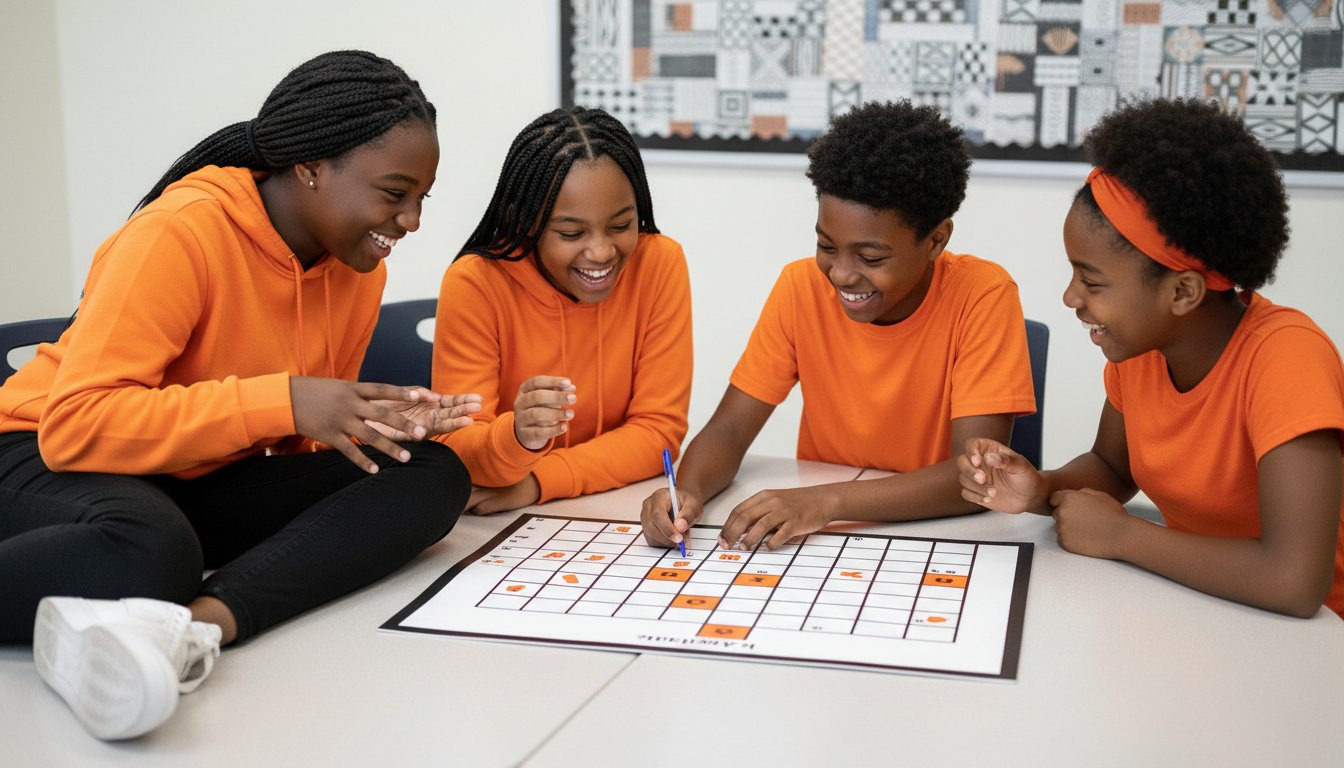
What if your February curriculum felt less like a repetitive lecture and more like a vibrant, daily ritual? We know the struggle of trying to find fresh black history month school activities that go beyond the same three names found in standard textbooks. It’s exhausting to plan deep, meaningful lessons when your prep time is limited to a 45-minute window between bells. You want to honor the heavy parts of history while also making space for the brilliance that exists right now.
We promise that representation doesn’t have to be a source of anxiety. You can move past the worksheets and foster true cultural appreciation through the power of play and shared discovery. In this article, we’ve gathered 12 low-prep strategies that help you build a sense of community in your classroom every single day. You’ll discover how to integrate bite-sized puzzles, artistic celebrations, and modern excellence into your 2026 school year to ensure Black culture and joy remain the North Star of your classroom.
Key Takeaways
- Shift your focus from simple memorization to a vibrant celebration of Black excellence and living history.
- Discover how to use interactive word games as high-impact black history month school activities that bridge the gap between vocabulary and culture.
- Adopt a daily Culture & Joy ritual to turn the first 10 minutes of class into a meaningful communal puzzle-solving experience.
- Find age-appropriate projects that range from storytelling for elementary students to persuasive design tasks for middle schoolers.
- Access professionally curated resources that center the Black experience and offer a soulful alternative to generic worksheets.
Reimagining Black History Month School Activities: From Memorization to Celebration
For the 2026 school year, we’re inviting educators to flip the script on how we approach the month of February. Traditionally, black history month school activities have focused on a rigid checklist of names, dates, and historical hardships. While honoring the giants of the past is vital, the narrative is evolving. We’re moving away from a “hero-worship” model that isolates a few individuals and toward a broader cultural appreciation that celebrates the collective. This shift ensures that students don’t just view Black history as a finished chapter in a textbook, but as a vibrant, ongoing story they’re part of today.
Centering “Black Joy” in your lesson plans isn’t just a feel-good strategy; it’s a powerful pedagogical tool. When students engage with stories of Black innovation, creativity, and triumph, it builds deeper empathy and sustained interest. Before February 1st even arrives, you can set the stage by auditng your classroom library and decor to ensure they reflect a diverse range of Black experiences. This proactive approach creates an inclusive environment where every student feels seen and celebrated from day one.
To better understand how hands-on creativity can transform your classroom, watch this helpful video:
Moving Beyond the ‘Struggle’ Narrative
It’s time to balance the scales. While we must respect the resilience shown during times of struggle, we also need to spotlight stories of innovation and art. Think about integrating contemporary excellence, like the 2024 breakthroughs in Black-led green technology or the global influence of modern Afrobeats. When we connect historical movements to present-day success, students begin to see themselves as part of a living history. This approach replaces a sense of distance with a sense of belonging and pride.
Why Interactive Learning Beats Static Lectures
The science of learning is clear: engagement drives retention. A 2023 study on classroom participation showed that gamified elements can increase information recall by up to 40 percent. By turning black history month school activities into shared cultural rituals, you foster a genuine sense of community. We prefer a “celebrating with” mindset over a “learning about” one. Whether it’s through a daily “mini” puzzle or a group research project, interactive learning transforms passive observers into active participants in Black culture and joy.
The Power of Puzzles: Enhancing Cultural Literacy Through Word Games
Puzzles are more than just a way to pass the time; they are vital instruments for deep learning. We define cultural word games as interactive tools that use clues rooted in Black history, wisdom, and traditions to build literacy. Unlike a static lecture, a crossword forces the brain to bridge the gap between a vocabulary word and its historical context. When a student solves a clue about Madam C.J. Walker, they aren’t just memorizing a name. They’re engaging with the legacy of America’s first female self-made millionaire, making the information stick in a way a standard list never could.
Decoding a clue requires a level of focus that a standard worksheet just can’t match. When a student encounters a clue about the 1963 March on Washington, they must synthesize their knowledge to find the answer. This process transforms black history month school activities from a passive chore into an active mission. For the 1 in 5 students who may have learning differences like dyslexia, the structured nature of a crossword provides a helpful framework. It reduces the “blank page” fear often found in essay writing, offering a low-anxiety entry point that builds confidence alongside knowledge.
Vocabulary Building with Black Excellence
We can use crossword clues to introduce names like Ida B. Wells, the pioneering investigative journalist, or Bass Reeves, the legendary lawman, quite naturally. Instead of a dry list of facts, the “Mini” format provides bite-sized wins that keep energy high in the classroom. These 5×5 or 7×7 grids are perfect for a 10-minute morning warm-up or a transition between subjects. For solvers of all ages, these puzzles serve as a shared cultural ritual that honors our collective journey. If you want to bring this into your classroom daily, you can find curated cultural puzzles that make this transition easy and joyful.
Representation Matters: When the Clues Look Like the Students
There’s a specific psychological impact when Black culture is centered in standard school games. It validates a student’s lived experience and signals that their heritage is the “standard” rather than an “extra.” We include clues about Sunday dinners and HBCU traditions alongside politics and sports to provide a holistic view of the diaspora. This approach shows that Black history is about joy as much as it is about justice. You can even empower your students to create their own clues based on their research. This turns them from consumers of history into curators of culture, fostering a sense of ownership that lasts long after February ends.

Grade-Specific Black History Month Activities for Every Classroom
Every classroom has its own rhythm. To make black history month school activities truly effective, we must match the activity to the student’s developmental stage. In 2026, educators are moving away from generic worksheets toward specialized projects that honor Black culture and joy through specific grade-level lenses. Whether it’s the tactile discovery of a word search or the complex analysis of media representation, the goal remains the same: fostering a deep, authentic connection to the material. We’ve found that when students see themselves in the curriculum, engagement levels naturally soar.
Adapting these activities for diverse learning needs is essential for an inclusive environment. Puzzles are particularly effective here because they provide a structured, low-stress framework. For students who might struggle with long-form reading, a crossword breaks down complex historical narratives into manageable, “bite-sized” wins. This approach ensures that every learner, regardless of their starting point, can participate in the collective celebration of Black excellence.
Elementary: Storytelling and Visual Word Finds
For our youngest learners, the focus is on wonder and discovery. We can use vibrant picture books, such as the 2022 release “The 1619 Project: Born on the Water,” as a springboard for simple “Mini” word finds. These puzzles help children recognize key vocabulary like *resilience*, *community*, and *legacy* without feeling overwhelmed. In the “Living Encyclopedia” project, students become “clue masters.” Each child researches one Black inventor, like Garrett Morgan and his 1923 patent for the three-position traffic signal, and writes a simple clue for a class-wide puzzle. Interactive bulletin boards also serve as a daily ritual where students add a “word of the day” that celebrates Black excellence.
Secondary: Critical Analysis and Puzzle Creation
Middle and high school students are ready for a deeper dive into research and media literacy. One powerful middle school project is the “persuasive stamp design,” where students create a postage stamp honoring a figure from the Harlem Renaissance and write a crossword clue to accompany it. High schoolers can analyze the legacy of crosswords in publications like *Ebony* or *Essence*; these magazines have centered Black voices for over 75 years. This study of syndicated puzzles and cultural nuances helps them see how games can affirm identity. To build healthy competition, consider hosting a school-wide “Culture & Joy” puzzle tournament. It turns learning into a shared ritual where speed and accuracy meet cultural pride.
Implementing a Daily ‘Culture & Joy’ Ritual in Your School
Consistency creates community. We’ve found that the most successful black history month school activities aren’t isolated assemblies; they’re daily habits. By dedicating just 5 to 10 minutes each morning to a “Culture Mini” puzzle, you transform the start of the day into a shared cultural ritual. This “Community We” approach removes the pressure of individual performance. Instead, the class works as a collective to solve clues. This ensures that every student feels like a valued contributor to the group’s success while centering Black culture and joy as a daily priority.
- Step 1: Kick off the morning with a bite-sized puzzle.
- Step 2: Solve together to build a sense of belonging.
- Step 3: Use one specific clue as a bridge to your main lesson or a quick discussion point.
- Step 4: Hand out “Cultural Pride” tokens for thoughtful participation and classroom recognition.
- Step 5: Keep the puzzles going year-round to cement Black history as American history.
The 5-Minute Daily Mini Challenge
Teachers are busy. We know that. The 5×5 “mini” format is a game-changer because it requires zero prep time and fits perfectly into the morning transition. You can use digital puzzle platforms to project the grid onto your smartboard, making it a no-print, eco-friendly option. To facilitate a group solve, try a “quick-fire” round where students shout out answers or a collaborative board where they take turns filling in the squares. This ensures a wide range of voices are heard. If you’re ready to start this ritual, you can find your daily puzzles here to make every morning a celebration.
Organizing a School-Wide Puzzle Tournament
Scaling this ritual from one room to the entire building creates a powerful sense of unity. For the 2026 school year, many administrators are planning “Family Puzzle Nights” to involve parents and the local community in the learning process. You can align your tournament themes with the 2026 Black History Month focus on “African Americans and the Arts” by featuring clues about the 1960s Black Arts Movement or the 1920s Harlem Renaissance. This cohesive messaging reinforces that Black history is a vibrant, living story. When the entire school participates, it turns a lesson into a shared experience that students will remember long after February ends.
Elevate Your Curriculum with BlackCrosswords Resources
Jan Buckner Walker created Black Crosswords with a singular, intentional mission: to center the Black experience in a space where it has historically been sidelined. When you select our resources for your black history month school activities, you’re choosing more than just a classroom filler. You’re opting for a professionally curated alternative to the generic, one-size-fits-all worksheets found on standard educational sites. These puzzles are designed to be culturally savvy, prioritizing relaxation and representation. They turn a simple game into an act of cultural affirmation that resonates with students and teachers alike.
We believe that learning should feel like a shared ritual rather than a clinical exercise. Our puzzles don’t just test memory; they celebrate the nuances of our community. By focusing on Black culture and joy as the North Star, we’ve built a platform where every clue feels like a familiar nod to heritage and excellence. For those looking to sharpen their skills before introducing these to the class, we recommend exploring our guide on How to Solve Crossword Puzzles: A Guide to Cultural Joy and Mental Agility. It’s a great way to build your own confidence as a facilitator of these cultural moments.
Curated Puzzle Books for Educators
Our themed collections are specifically designed to highlight the breadth of the Black experience. We offer books that dive deep into sports history, literary achievements, and political milestones. These physical books are a valuable addition to any classroom library or reading nook, providing a tactile experience that digital screens can’t replicate. Holding a book and filling in the squares with a pencil creates a sense of focused calm and accomplishment. For the 2026 school year, we’ve made bulk ordering options available for entire buildings or districts to ensure every student can have their own copy of these vibrant black history month school activities.
Custom Licensing and Partnerships
We want to help you make cultural literacy a year-round habit, not just a February event. School districts can now license our syndicated content to provide a steady stream of “mini” puzzles for their daily curricula. This ensures that the conversation about Black excellence continues through March, June, and beyond. We also love collaborating on custom projects. Whether your school is celebrating a 50-year milestone or you want to highlight a local Black pioneer from your specific city, we can craft puzzles that tell your unique story. Ready to bring this energy to your students? Discover our collection of Black culture crossword puzzles and books today!
Transform Your Classroom Rituals for 2026
Your classroom is a space where history comes alive every morning. We’ve explored how moving from passive observation to active, puzzle-based learning can fundamentally change how students connect with the diaspora. By integrating daily rituals that prioritize representation, you ensure that Black excellence is a year-round conversation. These black history month school activities serve as a bridge between the giants of the past and the innovators of the future. When students see their culture centered in the curriculum, they don’t just learn; they belong.
Our resources are crafted with this specific intentionality in mind. Jan Buckner Walker, the creator behind the beloved puzzles in Ebony and Essence magazines for over 20 years, designs every grid to center the Black experience. These books are already used by educators in over 1,000 schools nationwide to foster a sense of pride and representation. It’s time to move beyond the worksheet and embrace a more soulful way to teach.
Shop BlackCrosswords Puzzle Books to celebrate Black culture and joy in your classroom!
We’re excited to see how these rituals transform your school community. Let’s make 2026 the year where every student feels the power of Black culture and joy in their daily learning.
Frequently Asked Questions
What is the official 2026 Black History Month theme for schools?
The official 2026 theme designated by the Association for the Study of African American Life and History (ASALH) is “African Americans and the Civil Rights Movement.” This focus provides a specific lens for your black history month school activities, highlighting the 75th anniversary of pivotal 1951 legal and social milestones. It’s a powerful opportunity to explore how collective community action and grassroots organizing changed the world. Using this theme helps move your curriculum beyond individual heroes to celebrate the power of the movement.
How can I make Black History Month activities fun for elementary students?
You can make these activities fun by prioritizing hands-on discovery and visual storytelling over traditional lectures. Try the “Living Encyclopedia” project where students research one inventor, like Garrett Morgan, and create a simple clue for a class-wide puzzle. Integrating the “mini” word search format keeps energy high and provides quick wins for young learners. This approach ensures that children associate Black history with a sense of wonder, community, and personal achievement.
Are crossword puzzles effective for teaching Black history?
Crossword puzzles are highly effective because they transform passive reading into active problem-solving. Research from 2023 indicates that gamified learning can boost information retention by up to 40 percent compared to standard lectures. When students decode clues about Black excellence, they’re building deep cognitive connections between the vocabulary and the historical context. This method makes black history month school activities feel like a rewarding game rather than a repetitive chore, keeping students engaged longer.
Where can I find free Black History Month printables for my classroom?
You can find free resources through organizations like the Smithsonian or the National Education Association (NEA), which provide various PDF lesson plans. While these are useful starting points, they often lack the vibrant, “joy-first” curation found in specialized cultural puzzles. For a more modern experience, look for digital platforms that offer daily “mini” puzzles. These provide a fresh, low-prep way to keep your classroom engaged every morning without the need for excessive printing.
How do I avoid ‘simplification’ when teaching about Black leaders?
To avoid simplification, always pair historical facts with primary sources and contemporary context. Instead of just teaching that a leader was “brave,” show the specific investigative journalism techniques of Ida B. Wells or the complex legal strategies of the 1950s. Highlighting their humanity and their specific innovations helps students see them as real people rather than just names in a book. This depth prevents the “hero-worship” model and fosters true critical thinking in your classroom.
Can I use BlackCrosswords for high school history lessons?
High schoolers can use these puzzles to explore media representation and complex cultural nuances. Analyzing the legacy of crosswords in publications like *Ebony*, which has centered Black voices since 1945, offers a unique lesson in media literacy. Students can also take the “Mystery Maker” challenge to build their own grids. This task requires them to conduct deep research into Black scientists or artists to create accurate, challenging clues for their peers to solve.
How do I host a school-wide Black History Month puzzle tournament?
Hosting a tournament starts with scaling the daily “Culture & Joy” ritual to the entire building. You can use digital smartboards to project puzzles in common areas for a “Community We” solve during lunch or assembly. Involve parents by organizing a “Family Puzzle Night” where different generations work together to solve clues. Linking these events to the 2026 theme creates a cohesive message that celebrates collective knowledge and school-wide pride.
Is it better to focus on historical figures or contemporary Black culture?
It is best to strike a balance between historical resilience and contemporary innovation. While we must honor the 1960s civil rights milestones, we should also celebrate 2024 breakthroughs in Black-led technology and global art. This dual focus shows students that Black history is a living, breathing narrative that continues today. It allows them to see themselves in the story, connecting the wisdom of the past with the vibrant joy of the present.