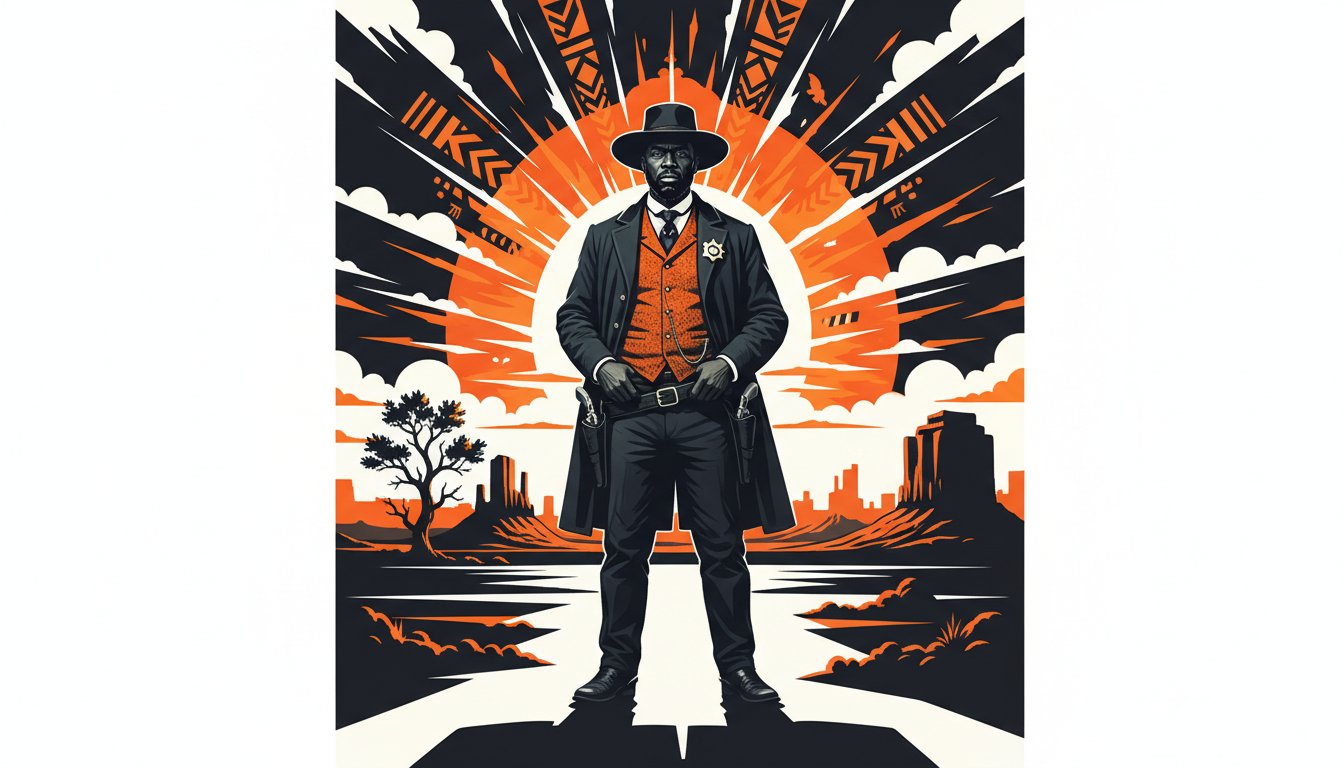
What if the legendary hero who inspired the Lone Ranger wasn’t a product of Hollywood imagination? You might find yourself asking, was bass reeves a real person, especially after seeing his story pop up in recent hits like HBO’s Watchmen in 2019 or the 2023 series Lawmen: Bass Reeves. The truth is even more powerful than the screen. Bass Reeves was a living legend who escaped slavery and became one of the most successful Deputy U.S. Marshals in American history.
We know how it feels to realize that the history books we read in school often left out the most vibrant parts of our heritage. It’s frustrating when Black excellence is treated like a myth instead of a documented fact. At Black Crosswords, we celebrate Black culture and joy by uncovering these hidden gems of our past. In this article, we’ll confirm the incredible details of his 35 year career starting in 1875. You’ll discover how he captured over 3,000 outlaws without ever being wounded and why his legacy is the ultimate act of cultural affirmation.
Key Takeaways
- Get the definitive answer to the question, was bass reeves a real person, while exploring his journey from enslavement to becoming a legendary lawman.
- Discover the staggering details of his 32-year career, including how he successfully made 3,000 arrests without ever being wounded in the line of duty.
- Examine the fascinating evidence and historical parallels that suggest this Black hero was the true inspiration behind the Lone Ranger.
- Trace his powerful path from the cotton fields of Arkansas to the Indian Territory, where he transformed his life to become a symbol of frontier justice.
- Understand how honoring figures like Reeves centers Black culture and joy, fostering a deeper sense of pride and belonging through our shared history.
The Man Behind the Badge: Confirming Bass Reeves Was a Real Person
If you have spent any time watching the latest streaming hits and wondered, “was bass reeves a real person?” the answer is a powerful yes. Bass Reeves was not just a character created for a script; he was a prolific American lawman who lived from 1838 to 1910. For over 30 years, he served as a Deputy U.S. Marshal, patrolling some of the most dangerous lands in the country. His life is a vibrant example of Black excellence that we are finally bringing into the light.
We see his story as more than just a history lesson. It is a shared cultural ritual of discovery. Much of his life is documented in the biography of Bass Reeves, which traces his path from being born into slavery to becoming a legend of the Old West. While his story was hidden for decades by a system that prioritized white narratives, his impact remains undeniable. He represents the grit and joy of a community that has always been central to the American story.
To better understand this concept, watch this helpful video:
The Legend vs. The History
It is easy to mistake his feats for folklore. Stories about his expert marksmanship and his ability to escape death feel like they belong in a novel. However, the truth is found in the archives. Federal court records in Fort Smith, Arkansas, confirm he arrested over 3,000 felons during his career. He was one of the most feared lawmen in the Indian Territory. While Hollywood spent a century pushing a specific “cowboy” trope, the reality of this Black lawman proves our history is much deeper.
Why Bass Reeves is Trending in 2026
The resurgence of interest in 2026 stems from a global curiosity about whether was bass reeves a real person or just a myth. Modern streaming services have finally given his story the platform it deserves. Digital communities are now sharing these “lost” chapters with a sense of cultural pride and joy. We are no longer waiting for permission to tell our stories. Seeing a man like Bass Reeves on screen is a moment of cultural affirmation. It reminds us that our ancestors were leading the way in the West.
From Enslavement to the Frontier: The Early Life of Bass Reeves
Bass Reeves was born into the harsh reality of enslavement in 1838 within Crawford County, Arkansas. By 1846, his enslaver, William Steele Reeves, moved the family to Grayson County, Texas. Growing up in this environment, Bass was forced into labor, but he possessed a spirit that couldn’t be contained by chains. His life took a dramatic turn during the Civil War. After a physical altercation with his enslaver’s son, George Reeves, Bass fled into the Indian Territory. This escape wasn’t just a flight from danger; it was a journey toward a destiny that still inspires Black culture and joy today. When people wonder, was Bass Reeves a real person, they are looking for the man who turned a desperate escape into a masterclass in survival.
Mastering the Land and Languages
During his years as a fugitive, Bass found sanctuary among the Cherokee, Creeks, and Seminoles. He didn’t just hide in the shadows. He immersed himself in their cultures and became fluent in several Indigenous languages. This linguistic skills gave him a massive tactical advantage that few other men on the frontier possessed. He spent this time sharpening his abilities as an expert marksman and a disciplined tracker in the dense wilderness. He could read the land like a book, identifying subtle signs that others missed. Through this deep immersion in the territory, he completed his transformation from a hunted fugitive to a self-reliant and free man of the frontier.
The Road to the Marshal Service
The post-Civil War era brought a new wave of chaos to the West, and the government needed men who understood the complex terrain of the Indian Territory. In 1875, Judge Isaac Parker, famously known as the “Hanging Judge,” took his seat at Fort Smith. Parker needed 200 deputies who were brave, honest, and familiar with the tribal lands. He recruited Bass Reeves specifically because of his unique skill set and his deep connections to the local communities. It’s a powerful moment in history to consider; a Black man was granted federal authority to arrest outlaws in a time of intense racial hostility.
His legendary career as a U.S. Deputy Marshal began here, proving that was Bass Reeves a real person is a question answered by his 32 years of service and 3,000 arrests. His story is a reminder of the brilliance found in our history, much like the hidden gems you’ll find when you solve a daily puzzle with us. Bass didn’t just follow the law; he became its most formidable face in the West. He carried his badge with a sense of communal pride that resonated across the frontier.

3,000 Arrests and Zero Wounds: His Legendary Career
Bass Reeves didn’t just survive the Wild West; he dominated it. Over a career spanning 32 years, he brought more than 3,000 outlaws to justice. That number is staggering. It averages out to nearly 100 arrests every year in some of the most lawless territory on the map. Despite facing off against the most dangerous fugitives of the 19th century, Reeves was never once wounded by a criminal. For anyone asking was bass reeves a real person, these hard facts from federal court records provide the definitive answer.
Standing six-foot-two and riding a powerful grey horse, he cut an unmistakable figure. He wore a twin-gun belt strapped to his waist and carried himself with a quiet, steady confidence. The 75,000-square-mile jurisdiction he patrolled was a brutal landscape. It covered parts of Arkansas and the Indian Territory, a region where many lawmen feared to tread. Reeves embraced the challenge, turning his daily routine into a masterclass of courage and skill.
The Master of Disguise
Reeves knew that a badge sometimes got in the way of a catch. He was a brilliant strategist who used creative tactics to close the gap. He often dressed as a ragged beggar or a fellow outlaw to gain a fugitive’s trust. His intelligence was just as sharp as his shooting. In one famous story, he outsmarted two outlaws by showing them a fake letter with a reward notice. While they were distracted by the news, he disarmed them both without firing a shot. He prioritized wit over violence whenever possible.
Integrity Above All
His commitment to the law was absolute. This dedication faced its ultimate test in 1902 when his own son, Bennie, was charged with murder. While other officers hesitated to act, Reeves insisted on serving the warrant himself. He arrested his son and delivered him to the court because his personal code of ethics didn’t allow for exceptions. This unwavering integrity earned him the respect of colleagues and criminals alike. He lived a life rooted in honor, proving that was bass reeves a real person whose legacy continues to celebrate Black culture and joy today.
The Real Lone Ranger? Exploring the Legacy of a Black Hero
Many folks wonder was bass reeves a real person because his life sounds like a Hollywood blockbuster. The truth is even more fascinating. Historians like Art T. Burton, who published the groundbreaking biography Black Gun, Silver Star in 2006, argue that Reeves is the primary inspiration for the Lone Ranger. The similarities are too specific to be mere coincidence. While the fictional Ranger used silver bullets, Reeves often handed out silver coins as a signature calling card. He was a master of disguise; he frequently dressed as a beggar, a farmer, or even an outlaw to catch fugitives. He even rode a light grey horse and spent his legendary career in the Indian Territory, just like the masked man on the radio programs of the 1930s.
Restoring the Masked Man’s True Identity
The Lone Ranger’s origin story heavily mirrors Reeves’ real life in the late 19th century. Reeves didn’t work in a vacuum. He often traveled with Native American companions who served as expert trackers and scouts. This dynamic clearly mirrors the relationship between the Lone Ranger and Tonto. In reality, Reeves spoke several tribal languages and maintained deep respect for the sovereignty of the Five Tribes. We believe it’s vital to highlight these Black roots today. Seeing a Black man as the blueprint for an American icon changes how we view the frontier. It turns a whitewashed myth back into a vibrant story of Black culture and joy. It’s about giving credit where it’s long overdue.
Why His Story Was Hidden
You won’t find Reeves in many old history textbooks. This exclusion was intentional. The Jim Crow era, which dominated American social structures from the late 1800s through 1965, worked hard to bury stories of Black authority and success. Media creators in the early 20th century knew a Black lead wouldn’t sell to segregated audiences. They took the traits, the horse, and the heroics, but they swapped the race to fit a “White West” narrative. Think of Reeves as a missing puzzle piece in our national story. When you snap him into place, the picture of American history finally becomes clear. We’re here to celebrate that complete picture and ensure these stories are never lost again.
Celebrate the legends who shaped our history while you sharpen your mind. Grab your daily dose of Black culture and joy with our latest mini puzzles.
Celebrating Black Culture and Joy Through History
Confirming that was bass reeves a real person is more than a simple history lesson; it’s an intentional act of reclaiming our space in the American narrative. When we learn about a man who arrested over 3,000 outlaws without ever being wounded, we aren’t just reading facts. We’re building a deep sense of belonging and pride. This brand of historical literacy acts as a vital tool for our mental well-being. Research from the Journal of Black Psychology indicates that a strong sense of ethnic identity correlates with higher levels of psychological resilience. By rooting ourselves in the truth of the frontier, we find the strength to navigate our own modern lives with a clearer sense of self.
Black Crosswords exists to make these stories accessible every single day. We believe that history shouldn’t stay trapped in heavy textbooks or academic journals. It should live in our conversations, our family dinners, and our morning rituals. Positioning these hidden gems of excellence at the center of our play helps us turn “Black history month” into a lifelong habit. It’s about finding Black culture and joy in the places we least expect it.
Representation in Modern Puzzles
You might find Bass Reeves popping up as a clue in our grids, reminding you of his legendary 32-year career as a Deputy U.S. Marshal. These aren’t just games; they’re cultural touchstones that validate our presence in every era of history. We’ve designed our platform so that solving crossword puzzles becomes a daily ritual of cultural affirmation. It’s a way to keep names like Reeves, Stagecoach Mary, and Bill Pickett alive in our collective memory. We encourage you to share these puzzles with your family and puzzle circles. It’s a beautiful way to pass down the legacy of the Old West while sharpening your mental agility.
The Daily Habit of Black Excellence
Making Black history a consistent part of your routine doesn’t have to be a chore. Our “mini” puzzle format is built for the modern, busy life. Most solvers finish these bite-sized challenges in under 5 minutes, making it a quick way to engage with our heritage during a commute or a lunch break. This low-barrier entry point ensures that representation is a constant companion rather than an occasional event. Our collections celebrate Black American legacies across every field, ensuring you always have something new to discover. You can explore puzzles focused on:
- Frontier legends and the real cowboys who shaped the West.
- Trailblazers in 20th-century politics who opened doors for others.
- Unsung heroes in sports who broke barriers long before the spotlight found them.
We invite you to join our community and continue the journey of discovery. Knowing that was bass reeves a real person is just the beginning of a much larger story. Let’s make the act of learning a shared experience that fuels our collective joy. Every clue you solve is a small tribute to the ancestors who paved the way for us all.
Honor the Legacy of the Real Lone Ranger
Bass Reeves wasn’t just a myth; he was a living testament to Black excellence on the American frontier. From escaping enslavement during the Civil War era to making over 3,000 arrests without ever being wounded, his life redefined the West. When people ask was bass reeves a real person, they find a hero whose 32 year career as a Deputy U.S. Marshal outshines any Hollywood fiction. His story reminds us that our history is filled with brilliant figures who paved the way for the representation we celebrate today.
We keep that spirit of discovery alive through our daily puzzles. Founded by Jan Buckner Walker, the creator behind the iconic puzzles in Essence and Ebony, our platform is unapologetically centered on the Black experience. Our curated collections offer moderate challenges perfect for daily relaxation and mental agility. These bite sized games make every solve feel like a shared cultural ritual. Celebrate Black culture and joy with our curated crossword collections! It’s time to sharpen your mind while honoring the stories that define us.
Frequently Asked Questions
Was Bass Reeves the first Black U.S. Marshal?
Bass Reeves was the first Black Deputy U.S. Marshal commissioned west of the Mississippi River. In 1875, U.S. Marshal James Fagan recruited him for his fluency in five Indigenous languages including Creek and Seminole. To those wondering was bass reeves a real person, his 32 year career stands as a factual pillar of our history. We celebrate his life as a powerful example of Black culture and joy.
Did Bass Reeves really arrest his own son?
Yes, Bass Reeves arrested his son, Bennie Reeves, for the murder of his wife in 1902. While other deputies were reluctant to take the case, Bass insisted on serving the warrant himself to ensure the law was upheld. He tracked Bennie down and took him into custody without incident. Bennie eventually served 11 years at Leavenworth federal prison before being released for good behavior.
How many people did Bass Reeves kill in the line of duty?
Bass Reeves killed 14 outlaws in self defense during his 32 year career. This number is low when you consider he successfully arrested more than 3,000 criminals. He always preferred to bring suspects in alive and often used his marksmanship to disarm men rather than end their lives. His record shows he was a master of strategy and restraint on the dangerous frontier.
Is the TV show Lawmen: Bass Reeves historically accurate?
The 2023 series Lawmen: Bass Reeves blends historical facts with dramatized storytelling to celebrate this icon. While it accurately portrays his 1875 appointment, it takes creative liberties with specific dialogue and character arcs. For anyone asking was bass reeves a real person, the show provides a vibrant entry point into his life. It’s a great way to engage with our history through a modern lens.
Where is Bass Reeves buried?
Bass Reeves is buried in Muskogee, Oklahoma, but the exact location of his grave is currently unknown. He passed away from Bright’s disease on January 12, 1910, and over 300 people attended his funeral. Historians believe he rests in an unmarked grave within the Agency Cemetery. Even without a headstone, his legacy remains a permanent and visible part of the American story we honor today.
What was the “Hanging Judge” Parker’s relationship with Bass Reeves?
Judge Isaac Parker and Bass Reeves shared a professional relationship built on deep mutual respect. Parker began his tenure at the Fort Smith federal court in 1875 and trusted Reeves with the most difficult warrants. Reeves was one of the 200 deputies who navigated the 74,000 square miles of Indian Territory effectively. He brought thousands of fugitives before Parker’s bench during their long careers together.
Did Bass Reeves use silver bullets like the Lone Ranger?
Bass Reeves did not use silver bullets, but he did have a habit of giving out bright silver coins as a signature. Historian Art T. Burton suggests his life story inspired the Lone Ranger because he rode a grey horse and used clever disguises. While the silver bullets are a Hollywood invention, the real life hero was far more impressive. He relied on his wits and his Winchester rifle.
Why was Bass Reeves so good at disguises?
Bass Reeves used disguises because he was a master of psychological strategy. He frequently dressed as a beggar, a farmer, or even an outlaw to get close to fugitives without raising suspicion. Since he couldn’t read or write, he memorized every warrant by ear before heading out. This mental sharpness allowed him to stay in character and capture dangerous criminals while keeping himself and others safe.